


Enhancing Trail Access within BLM’s First Wilderness
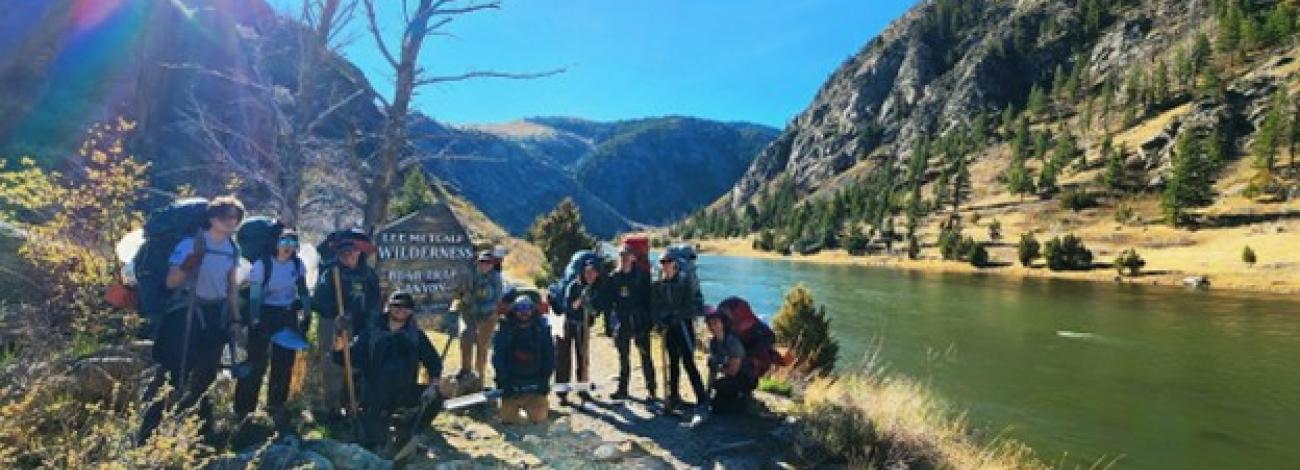
Dillon, Mont.- The Bureau of Land Management Dillon Field Office, in partnership with the Montana Conservation Corps (MCC), are tackling years of deferred maintenance to ensure the Lee Metcalf Wilderness - Bear Trap Canyon Unit remains both wild and accessible.
The Lee Metcalf Wilderness - Bear Trap Canyon Unit became BLM's first designated wilderness in 1983. Spanning 6,347 acres, it offers stunning views and activities such as whitewater rafting, fishing, and hiking along the Bear Trap National Recreation Trail.
“The Bear Trap Canyon area is a combination of steep canyon walls, a wild and dynamic river, and relatively accessible terrain creates a rare overlap between a true wilderness experience and high levels of public use,” says Kristen Ulery, outdoor recreation planner at the Dillon Field Office. “Visitors can still find solitude and a sense of immersion, even within a heavily visited corridor, which presents both opportunity and ongoing management complexity.”
The Bear Trap National Recreation Trail is 7.5 miles long. The first three and a half miles are flat and easy, while the upper four miles get fewer visitors and have not been maintained as often. Ulery noted that relying solely on internal capacity was no longer sufficient to address maintenance needs in this sector of the trail, making the partnership with MCC necessary to help maintain proper access.
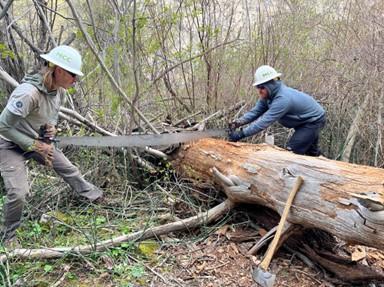
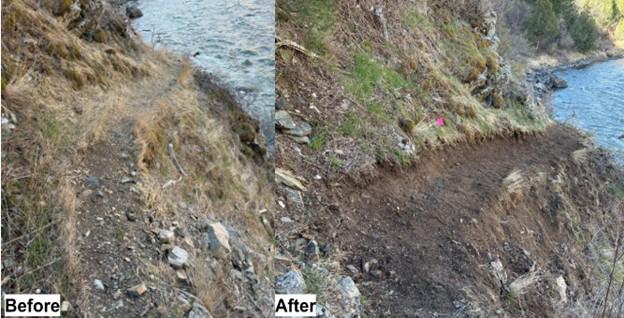
As part of a multi-year partnership MCC crews successfully restored nearly two miles of the upper section of the Bear Trap National Recreation Trail. Their work involved tread maintenance and reconstruction and reestablishment of proper backslope to improve drainage and long-term sustainability. They also cleared fallen trees, rocks, and other obstructions to ensure safe passage. This work builds on 2025 efforts, which included brushing the entire upper section to improve access and reduce public exposure to poison ivy.
Ulery reflects, “Our partnership with MCC directly expanded our capacity to complete priority trail work that would have been difficult, if not impossible, to accomplish with existing staff and resources alone. Their crews were able to operate effectively in a wilderness setting and sustain an effort to address deferred maintenance over a meaningful stretch of trail. Ultimately, the partnership enabled a level of progress and impact that would not have been feasible otherwise, while also providing a strong foundation for future partnership-based work.”
This project was a mutually beneficial opportunity, as the work on the Bear Trap Trail was incorporated into the MCC’s early-season Leadership Development Program, in which crew leaders are trained in natural resource and leadership skills in preparation for the coming field season. Amanda Pfaff, MCC’s Greater Yellowstone Regional Director, stated, “This project offered an ideal blend of hands-on skill building work and meaningful exposure to wilderness and backcountry conditions that are essential to our organization’s programming. It truly was a win‑win – engaging young people in completing critical public‑lands work while giving our members the chance to strengthen their leadership and practical field skills.”
Looking ahead, the Dillon Field Office views this effort as a significant step toward proactive and sustainable management. Instead of just fixing problems as they arise, the goal is to gradually improve and maintain the area to avoid ongoing maintenance issues. Ulery shared her vision for the Bear Trap Canyon Unit moving into the future, explaining: “At its core, the vision is to protect the wilderness character of the area while thoughtfully managing the level of use it receives. That includes maintaining a trail system that supports access without driving resource degradation and ensuring that visitors can still experience the solitude and immersion that define the area. As recreation use continues to increase, the upper section of the Bear Trap Trail offers an enhanced experience through solitude and scenic values as a result of this work, providing a place of solace within an otherwise busy river corridor.”
Related Stories
- National Public Lands Day Volunteers Revitalize Dean S. Reservoir in Montana
- National Public Lands Day Paddles, Plants and Caves: BLM Connects Milwaukee Youth with the Outdoors
- Celebrating 30 Years of California Condor Recovery at Vermilion Cliffs National Monument
- Using Beavers as Partners in Riparian Habitat Restoration in Las Cienegas National Conservation Area
- Fossils, furs and a few sparks at Kemmerer Outdoor Discovery Day
Office
1005 Selway Dr.
Dillon, MT 59725-9431
United States