


BLM seeks input on target shooting in Sonoran Desert National Monument
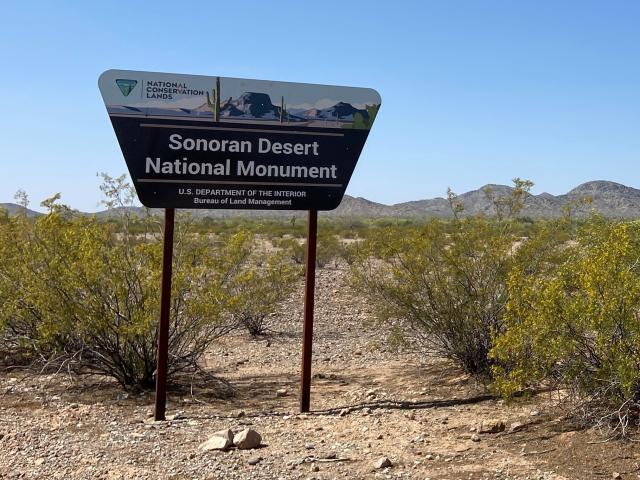
PHOENIX – The Bureau of Land Management is seeking public comments on where and whether recreational target shooting should be allowed in the Sonoran Desert National Monument. This effort aligns with direction in Executive Order 14313, “Establishing the President’s Make America Beautiful Again Commission,” to expand access to public lands and waters for recreation, hunting, and fishing.
The Sonoran Desert National Monument, established in 2001, contains about 486,400 acres of BLM-managed public lands in Maricopa and Pinal counties. About 5,295 acres are currently available for recreational target shooting.
The BLM completed a resource management plan for the monument in 2012. Under a March 2015 court order, the BLM reanalyzed the impacts of recreational target shooting in the monument. In 2018, the BLM amended the resource management plan to allow dispersed recreational shooting in about 90% of the monument. That decision was challenged in U.S. District Court in 2019, and in 2024, the BLM completed a resource management plan amendment that allowed recreational shooting in about 1% of the monument. The latest amendment was also challenged in 2025.
A notice published in Friday’s Federal Register will open a 30-day public comment period, which will close March 30. Additional information is available at the BLM National NEPA Register, where comments may be submitted through the “Participate Now” option (preferred). Comments may also be emailed to BLM_AZ_SDNMtargetshooting@blm.gov or delivered to BLM Sonoran Desert National Monument, Attn.: RMPA EA, 2020 E. Bell Road, Phoenix, AZ 85022.
For more information, please contact the Lower Sonoran Field Office at blm_az_pdo@blm.gov or 602-867-5400.
The BLM manages about 245 million acres of public land located primarily in 12 western states, including Alaska, on behalf of the American people. The BLM also administers 700 million acres of sub-surface mineral estate throughout the nation. Our mission is to sustain the health, diversity, and productivity of America’s public lands for the use and enjoyment of present and future generations.