


BLM revokes American Prairie bison grazing permit
Organization:
Media Contact:
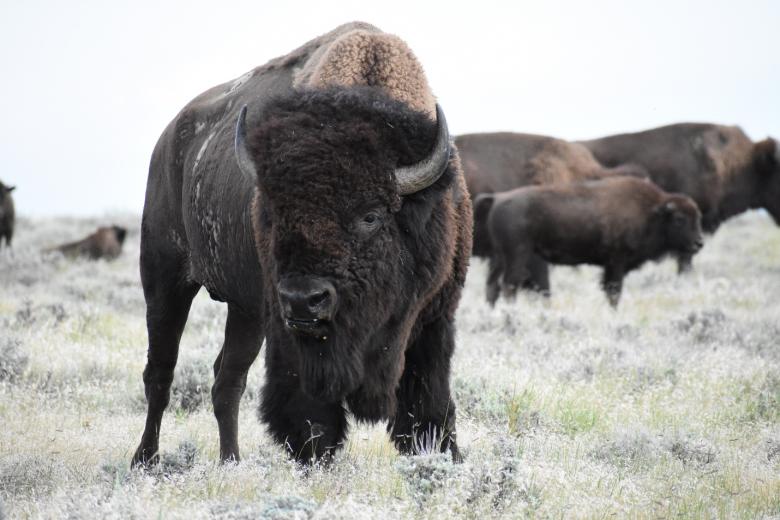
WASHINGTON — The Bureau of Land Management today issued its final decision to rescind grazing permits for seven allotments in Phillips County, Montana, held by American Prairie, following a remand from the Secretary of the Interior directing the bureau to reevaluate permits issued in 2022.
Under the Taylor Grazing Act, the BLM may authorize grazing only for domestic livestock managed primarily for production‑oriented purposes. After reviewing the administrative record, applicable law, and American Prairie’s own materials and public statements, the BLM concluded that American Prairie manages its bison as wildlife used primarily for conservation and ecological restoration rather than as a production‑oriented domestic livestock operation.
Notwithstanding claims that American Prairie treats bison “like cattle,” including because it tags, vaccinates, and donates meat from its bison, American Prairie has consistently been clear that its primary management focus is conservation and an effort to restore wild populations and reestablish natural ecological processes. Under federal law, only production‑oriented livestock operations qualify for BLM grazing permits, and the BLM lacks statutory authority to authorize the bison grazing previously permitted on these allotments.
“Public lands are central to the strength and success of America’s ranching and livestock communities,” said Acting BLM Director Bill Groffy. “Consistent with the principles of the Taylor Grazing Act of 1934, the Department of the Interior is committed to responsible stewardship that keeps these lands productive for grazing, supports rural economies, helps feed communities at home and abroad, and preserves the ranching traditions that have defined the American West for generations.”
The final decision rescinds bison grazing authorizations, issues cattle‑only permits where appropriate, and provides for an orderly transition period for the removal of bison from public lands by Sept. 30, 2026. The decision applies only to these seven allotments and does not affect other permit holders, treaty rights, tribal grazing authorizations or tribal bison herds.
American Prairie, along with any other adversely affected party, may appeal the decision to the Department of the Interior’s Office of Hearings and Appeals, as outlined in the decision's right of appeal.
To be clear, the BLM is not evicting hundreds of bison from Montana. The BLM is simply rescinding grazing authority for American Prairie’s bison under these permits and does not preclude American Prairie’s herd from occupying their private land. The Department of the Interior continues to support bison conservation and management efforts across federally managed lands, in partnership with tribes and state governments, regardless of the status of any individual grazing permit. Yellowstone National Park maintains the nation’s only continuously wild bison herd, and the longstanding Interagency Bison Management Plan continues to guide conservation, migration management and disease prevention in coordination with the State of Montana, tribal nations and federal agencies. Tribal conservation programs, including the Fort Peck Assiniboine and Sioux Tribes’ quarantine and restoration efforts and the Confederated Salish and Kootenai Tribes’ management of the National Bison Range, also remain active and ongoing. The BLM continues to permit 8,831 bison as domestic livestock on federally managed grazing allotments.
The BLM manages about 245 million acres of public land located primarily in 12 western states, including Alaska, on behalf of the American people. The BLM also administers 700 million acres of sub-surface mineral estate throughout the nation. Our mission is to sustain the health, diversity, and productivity of America’s public lands for the use and enjoyment of present and future generations.