


BLM Celebrates 2026 Rangeland Stewardship and Innovation Award Winners
Organization:
Media Contact:
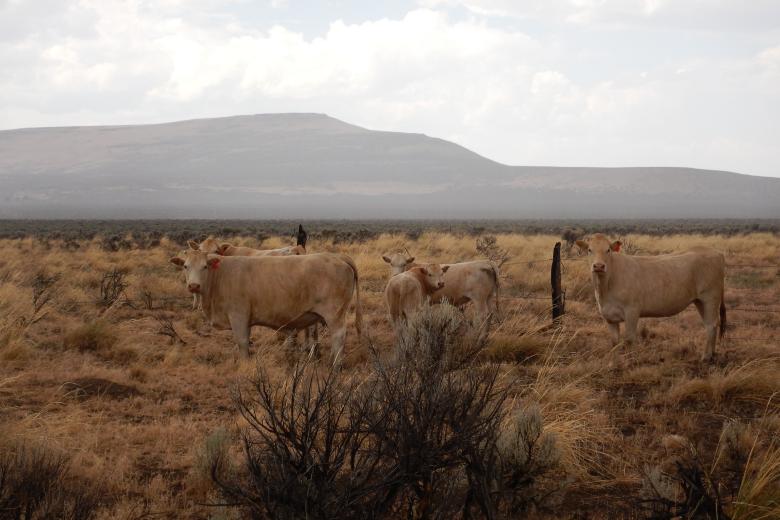
WASHINGTON – The Bureau of Land Management celebrates the winners of the 2026 Rangeland Stewardship and Innovation Awards, which recognize exemplary management, creative use of technology, and outstanding accomplishments to restore and maintain the health of public rangelands.
The awards will be presented tomorrow at a ceremony hosted by the Public Lands Council during its 58th Annual Meeting, in Copper Mountain, Colo., and via Zoom from 12-1:30 p.m. Mountain Time (please login 5-10 minutes early). The BLM and Public Lands Council have partnered for 21 years to honor livestock grazing permittees and lessees who demonstrate exceptional management, collaboration, and communication that restores, conserves, or enhances our public lands, and to recognize their accomplishments at a gathering of their peers.
“These awards honor the enduring legacy and forward-thinking dedication of generations of ranchers who champion new technology, and care deeply for our public rangelands. Their commitment not only drives job creation, it creates the food and fiber that feeds and clothes American families, and strengthens their communities,” said BLM Director Steve Pearce. “It’s inspiring to see our ranchers embracing innovative grazing techniques to meet the challenges on public lands and promote sustainable practices that will support healthy rangelands for generations to come.”
“These awards recognize the resiliency and ingenuity of federal lands ranchers, who are tasked every day with conserving and producing more with less,” said Public Lands Council President Tim Canterbury, whom is also a permittee in Colorado. “PLC appreciates this partnership with BLM to build up and promote the vital work these ranchers do to manage millions of acres by protecting critical wildlife habitat, improving the health of native grass stands, and reducing catastrophic wildfires. Congratulations to the award recipients for carrying out the hard work of livestock production and conservation – I am proud to call these ranchers my colleagues because their work lifts us all up.”
There are two permittee and two collaborative team winners, one each in stewardship and innovation.
The Rangeland Stewardship Permittee winner is Jamie Johnson, who implements key innovations of a drought response plan, independent rangeland monitoring and virtual fencing to efficiently manage livestock, enhance the land’s resilience, and protect sensitive cultural sites on the Yellow Jacket Canyon Allotment within the Canyons of the Ancients National Monument. Ms. Johnson’s proactive collaboration with the BLM, academia, and conservation partners result in data-driven adjustments to cattle numbers, resulting in the Foundation for America’s Public Lands funding this virtual fencing project.
The Rangeland Stewardship Collaborative Team winner is the Deep Springs Resource Management Team, based in Big Pine, California, which integrates federal, state, and educational partners to collaboratively manage more than 100,000 acres of public and private land in the Eastern Sierra ensuring sustainable livestock production; rigorous protection of sensitive habitats and species; and responsive land use. Led by Deep Springs College, which teaches students practical land stewardship, leadership skills, and responsibility through hands-on ranch work, putting what they learn in the classroom into real-world conservation to foster the next generation of public land managers.
The Rangeland Innovations Permittee winner is the Hunewill Ranch Land and Livestock, Co., a seventh-generation ranching operation in Bridgeport, California, who pioneered early adoption of virtual fencing on BLM, U.S. Department of Agriculture’s Forest Service, and private lands to address complex grazing management issues. The Hunewill family have also established a 4,100-acre wildlife easement, actively participated in sage grouse action plans and watershed improvement initiatives. Their collaborative approach to share lessons learned fosters a culture of partnership, driven landscape-scale improvements, and serves as a model for creative problem-solving.
The Rangeland Innovations Collaborative Team winner is the Carbon County Weed & Pest District, Rawling, Wyo., which increased to an unprecedented level the effectiveness of the BLM Rawlins Field Office’s weed program. Superintendent Reese Irvine coordinated multiple partners, leveraged BLM agreements to secure substantial matching grants to aerial treat more than 130,000 acres across BLM, state, and deeded lands, then engaged partners to monitor effectiveness. This cross-boundary collaborative approach significantly expanded treatment windows, ensured full utilization of funding, and strengthened ecological mitigation protocols, including critical raptor monitoring efforts.
The Public Lands Council represents the cattle and sheep producers who hold approximately 18,000 public lands grazing permits. Not only do these permittees provide essential food and fiber resources to the nation, they eradicate invasive species, reduce wildland fire risk, and conserve vital wildlife habitat. The BLM, National Park Service, U.S. Fish and Wildlife Service, USDA’s Forest Service, and Public Lands Council partner to make public landscapes more resilient across the West.
The BLM manages 155 million acres of public lands for grazing, with permits across nearly 22,000 allotments. Public lands ranchers play a key role in food security and keeping grocery costs down, two top priorities for this Administration. Grazing on BLM-managed public lands nationwide boosts the U.S. economy by nearly $3 billion annually.
The BLM manages about 245 million acres of public land located primarily in 12 western states, including Alaska, on behalf of the American people. The BLM also administers 700 million acres of sub-surface mineral estate throughout the nation. Our mission is to sustain the health, diversity, and productivity of America’s public lands for the use and enjoyment of present and future generations.