


BLM removes five walls from active raptor avoidance areas in Indian Creek
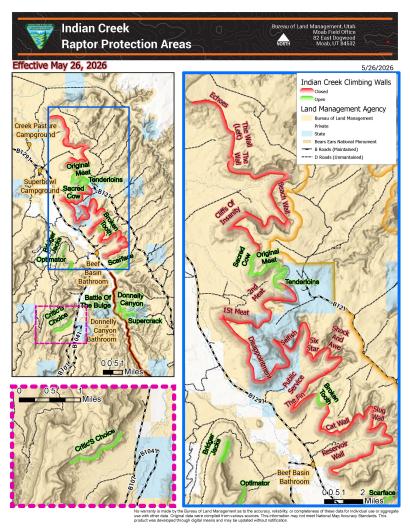
MONTICELLO, Utah – Following spring raptor monitoring, BLM biologists have updated climbing access guidance in the Indian Creek area. Five walls have been removed from the raptor nesting avoidance list and are now available to recreation for the remainder of the year; those walls are: Original Meat, Tenderloins, Broken Tooth, Sacred Cow, and Critic's Choice.
This update will be posted throughout the Indian Creek corridor. The public is also reminded that there are private land holdings throughout the Indian Creek Corridor. Please respect private landowners’ boundaries and signage. Before recreating, please refer to the Raptor Protection Areas Map below to identify avoidance areas.
From March to late August, raptors and other migratory birds use shallow depressions on ledges, cliffs, and rock walls to build nests — often returning to the same site, year after year. In southeastern Utah, raptors like falcons, eagles, and hawks continue to recover, thanks in part to cooperation from the public, climbing communities, and governmental partners. The BLM coordinates these raptor protection efforts with the Utah Trust Lands Administration, which manages the climbing areas known as Disappointment Cliffs and portions of the Second Meat Wall climbing area.
For voluntary climbing avoidance questions, contact the Monticello Field Office at blm_ut_mt_mail@blm.gov or 435-587-1500.
The BLM manages about 245 million acres of public land located primarily in 12 western states, including Alaska, on behalf of the American people. The BLM also administers 700 million acres of sub-surface mineral estate throughout the nation. Our mission is to sustain the health, diversity, and productivity of America’s public lands for the use and enjoyment of present and future generations.