


BLM Approves Projects to Improve Forest Health and Reduce Wildfire Risk in the Fall River Valley
ALTURAS, Calif. – The Bureau of Land Management Applegate Field Office has approved two forest resilience projects in the Fall River Valley, aimed at improving forest health, reducing wildfire risk, and strengthening community preparedness. Work on both projects is expected to begin in fall 2026.
The Day Fire Pre-Commercial Thinning Project builds on recovery efforts following the 2014 Day Fire, which burned more than 13,000 acres of primarily private timberland and a portion of BLM-managed public land northeast of Day. After salvage operations in 2015, the BLM replanted the area in 2016 with approximately 78,000 ponderosa pine seedlings. To support the long-term health and resilience of this forest, the BLM will complete pre-commercial thinning, a common forestry practice to reduce stand density and improve forest health, on about 120 acres of regenerating trees. Work will be conducted by hand crews using chainsaws to lop and scatter trees, leaving the material to decompose naturally.
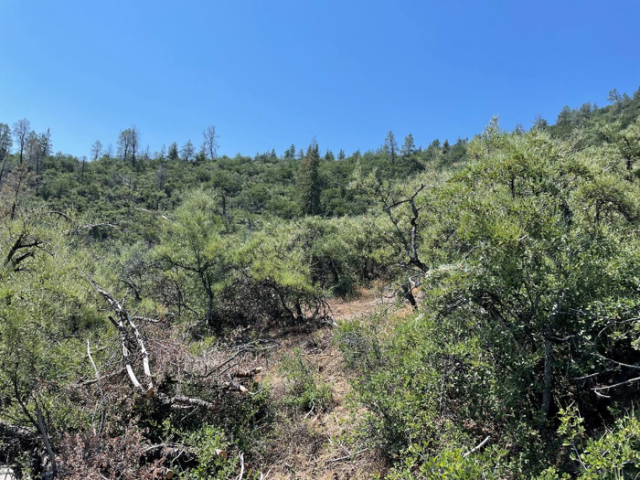
The Cassel–Fall River Road Woodland Health and Hazardous Fuels Reduction Project expands upon fuels reduction work conducted from 2020 - 2026. The BLM will continue removing hazardous vegetation on roughly 1,400 acres of BLM-managed public land near Fall River Mills, using hand crews, mechanical equipment, and prescribed fire. These treatments are designed to lower wildfire intensity, reduce dense vegetation, improve conditions for firefighters, and enhance community safety.
The decision record and other documents can be found at the BLM National NEPA Register for the Day Fire Pre-Commercial Thinning Project and BLM National NEPA Register for the Cassel-Fall River Road Woodland Health and Hazardous Fuels Reduction Project.
The BLM manages about 245 million acres of public land located primarily in 12 western states, including Alaska, on behalf of the American people. The BLM also administers 700 million acres of sub-surface mineral estate throughout the nation. Our mission is to sustain the health, diversity, and productivity of America’s public lands for the use and enjoyment of present and future generations.