


Nevada communities invited to apply for fire mitigation funding
Event Description
RENO, Nev. — The Nevada Fire Chiefs Association (NFCA) and Bureau of Land Management (BLM) Nevada have partnered for a second year of the Wildfire Risk Reduction Program (WRRP), offering grants of up to $75,000 for hazardous fuels reduction projects that reduce wildfire threats to Nevada communities. Applications are open now through March 1, 2026.
Nevada groups eligible for the program (see below) are encouraged to attend a live informational webinar at 1 p.m. on Wednesday, January 7, 2026. The webinar will cover program details and the application process. A link to the webinar and a recording will be available on the WRRP application webpage.
The program will distribute approximately $847,665 to support hazardous fuels reduction projects in Nevada’s wildland urban interface, where homes and communities border undeveloped land. Grants will fund activities, such as cutting back overgrown vegetation, to lessen wildfire severity and protect public safety, property, and infrastructure.
“Addressing wildfire threats across jurisdictional boundaries is critical to protecting Nevada communities, private property, the environment, and public lands,” said Kelsey Griffee, BLM Nevada Deputy State Fire Management Officer. “BLM Nevada is committed to partnering with groups across the state to mitigate wildfire risk, where public lands surround so many communities.”
The WRRP is funded through BLM Nevada’s Community Assistance Program, a $1.6 million investment in fuels reduction through four community partners in 2026–2027.
“This partnership with BLM Nevada strengthens our efforts to reduce wildfire risk statewide,” said Dave Cochran, NFCA President and City of Reno Fire Chief. “These projects will improve safety for residents and firefighters, protect property and infrastructure, increase public awareness, and reduce fire spread between private and public lands.”
Eligibility
County governments or municipalities, 501(c) (3) organizations in Nevada, statutorily recognized political subdivisions such as a Fire Protection District, Soil & Water Conservation Districts, or Native American Tribes working on behalf of one or more communities at risk of wildfires in Nevada.
Requirements
Applicants must have an active SAM.gov account and include their Unique Entity ID (UEI). Groups without an active account should register as soon as possible to avoid delays.
How to apply
Application instructions and required documents are available on the WRRP application webpage. Completed applications must be submitted by 5 P.M. on March 1, 2026. Grant recipients will be notified by the end of March.
For more information
Questions may be directed to NFCA Executive Director Kellie Baratti at kelli@nvfirechf.org or (775) 720-9874.
Interested applicants are encouraged to attend the informational webinar at 1 P.M. on January 7.
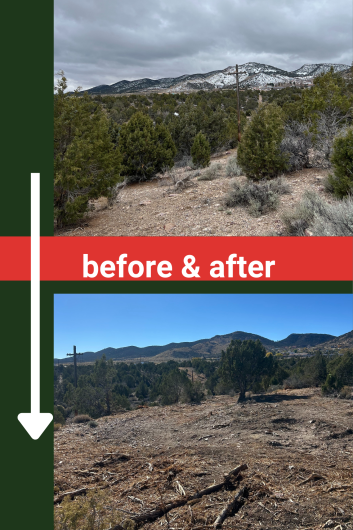
(Image) Year 1 of the Wildfire Risk Reduction Program
Before and after photos show vegetation removed near homes in Lincoln County during the Caselton & Pioche Fire Mitigation Project. The project was implemented in 2025 by the Lincoln County Fire Protection District with grant funding from the Wildfire Risk Reduction Program.
Fuel breaks were established using mastication and chipping methods across 18 acres, reducing wildfire risk for over 900 residents and numerous homes in two communities.
Photos courtesy of Lincoln County Fire Protection District.
The BLM manages about 245 million acres of public land located primarily in 12 western states, including Alaska, on behalf of the American people. The BLM also administers 700 million acres of sub-surface mineral estate throughout the nation. Our mission is to sustain the health, diversity, and productivity of America’s public lands for the use and enjoyment of present and future generations.